
- Fayetteville, AR
- ResearchGate
- Github
- Google Scholar
- ORCID
-
 Web of Science
Maps & Spatial Analysis
Arkansas Rice — Remote Sensing & GPP
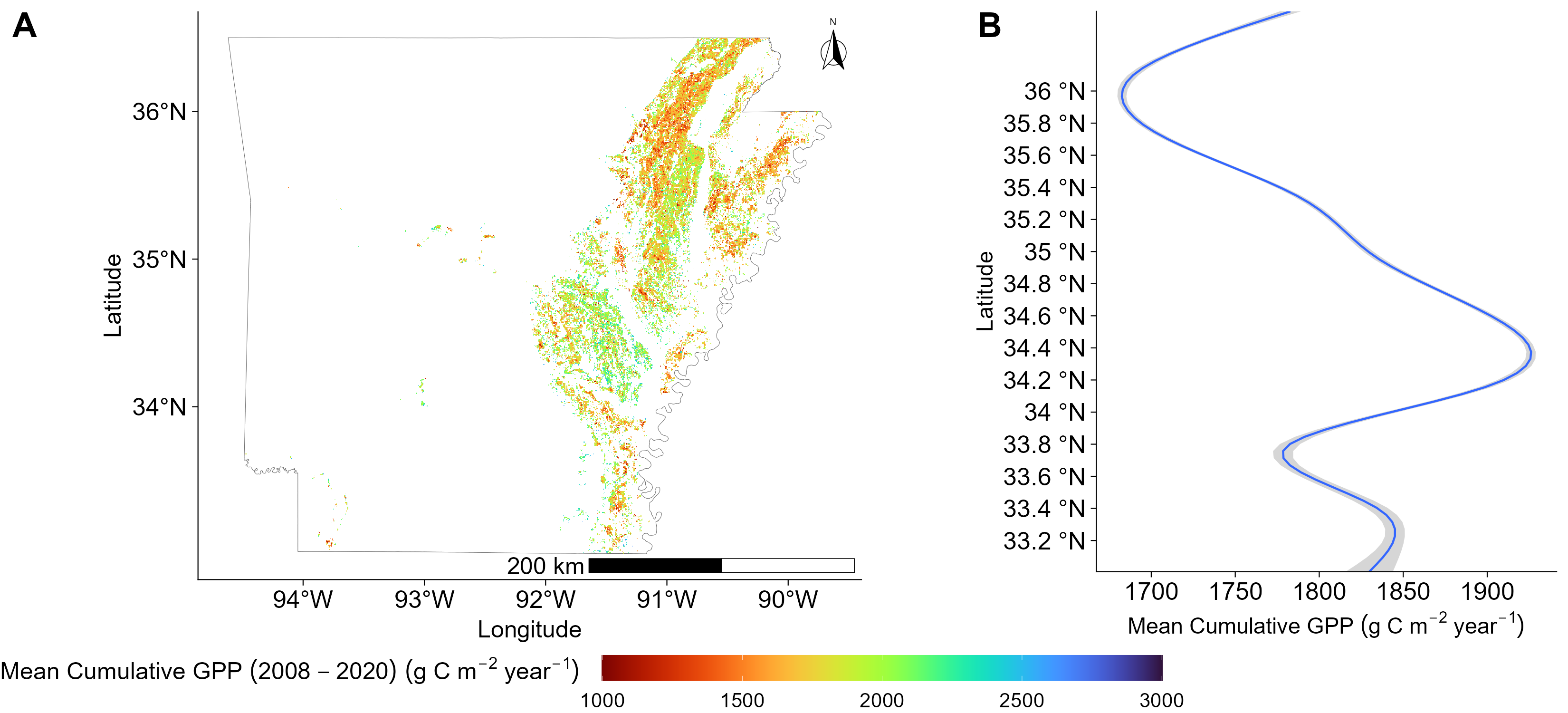
Spatial Profile of Rice Photosynthesis Across Arkansas
(A) Mean cumulative GPP (2008–2020) of rice at 500-m resolution modeled with the Vegetation Photosynthesis Model. (B) Mean latitudinal distribution of GPP, showing a north–south productivity gradient across the state.
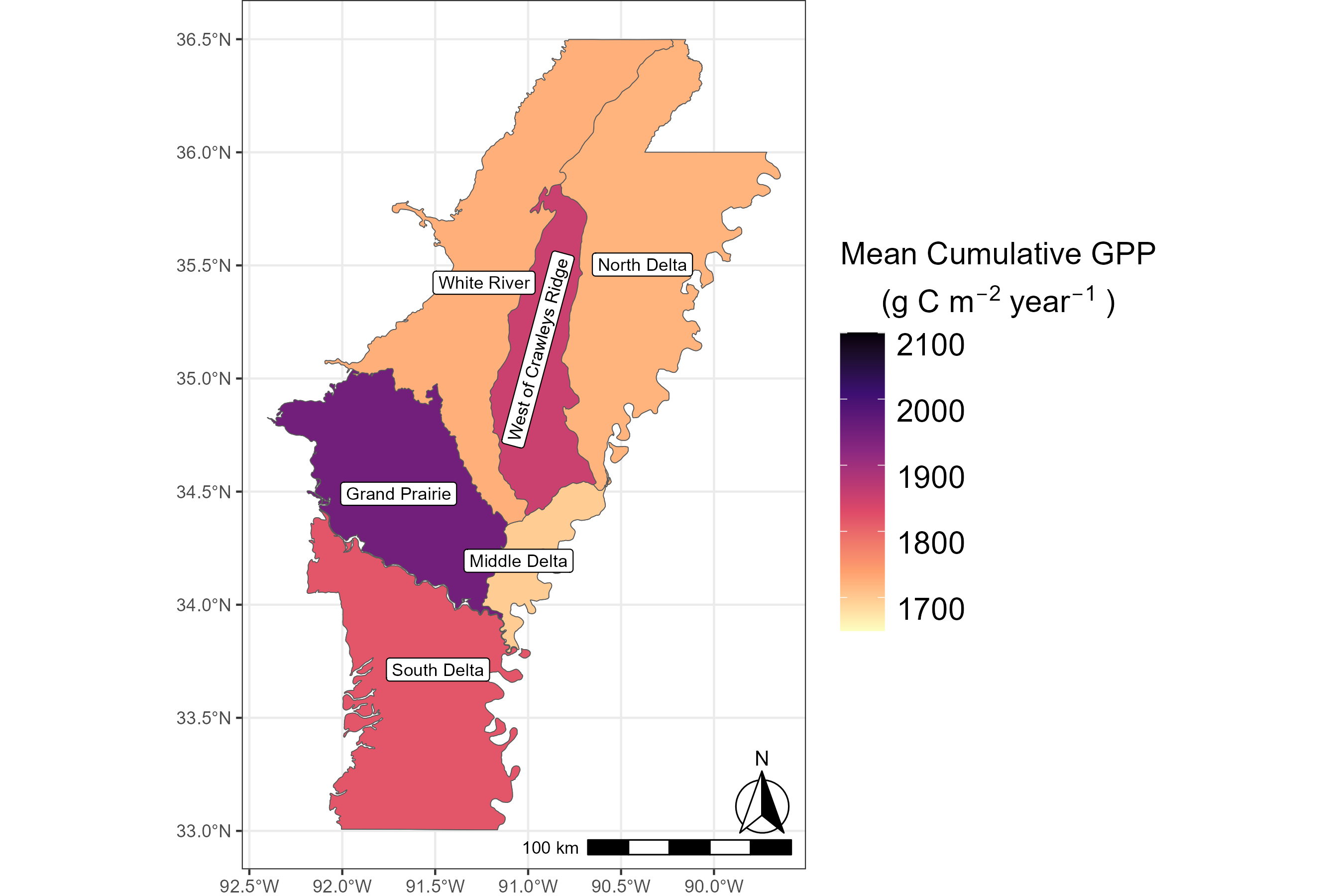
GPP by Rice Farming Region
Spatial comparison of gross primary productivity across the distinct rice-farming regions of Arkansas, highlighting regional variability in crop carbon assimilation.

GPP–Yield Correlation & Significance Map
Field-level map of the Pearson correlation between VPM-modeled GPP and reported rice yield, with significance overlay indicating where the relationship is statistically robust.
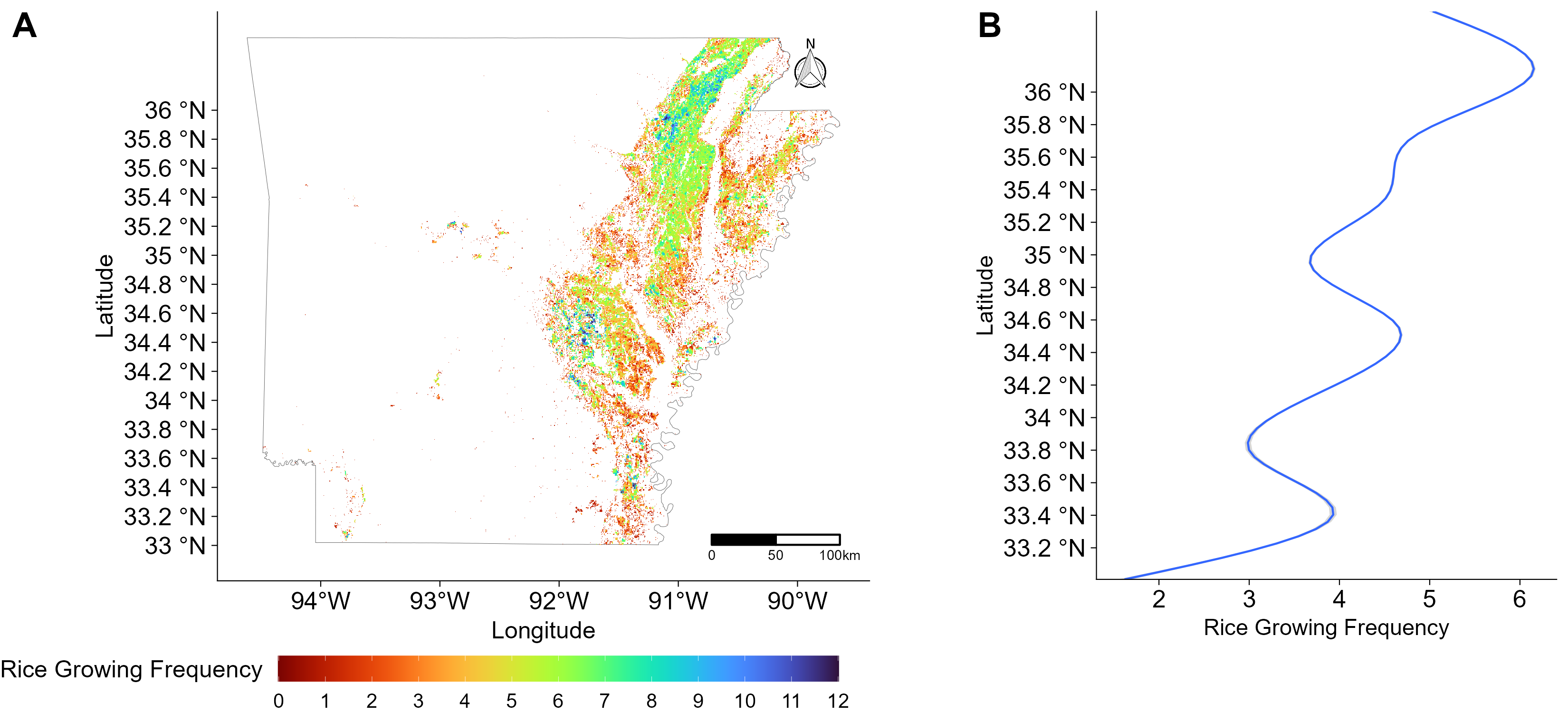
Rice Growing Frequency in Arkansas (2008–2020)
Pixel-level map of how often each field was planted with rice across the 13-year study period, derived from the USDA Cropland Data Layer using Google Earth Engine.
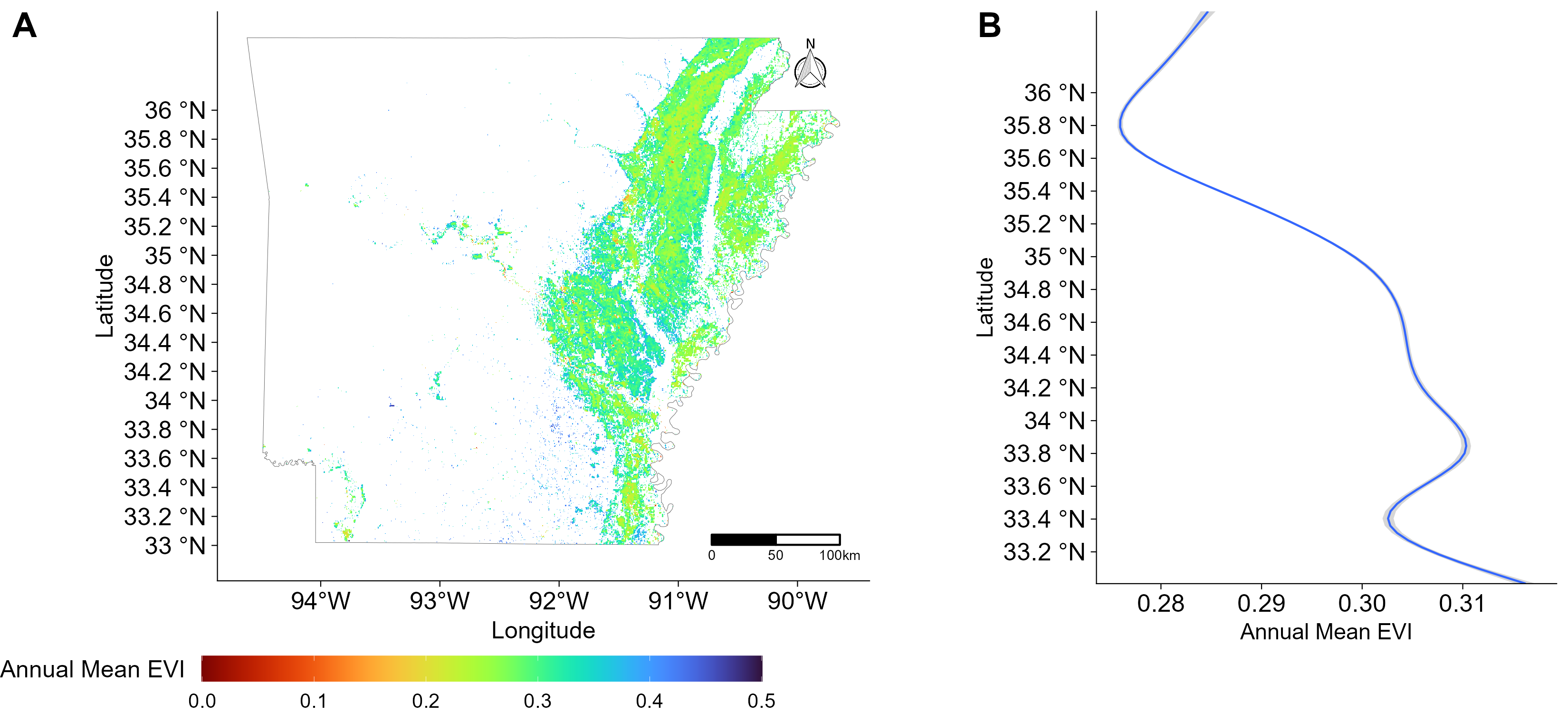
Spatial Distribution of EVI Across Arkansas Rice Fields
Satellite-based map of the Enhanced Vegetation Index (EVI) showing canopy greenness variability across rice production areas, derived from MODIS imagery.
Bangladesh — Land Use, Urban Growth & Waterlogging
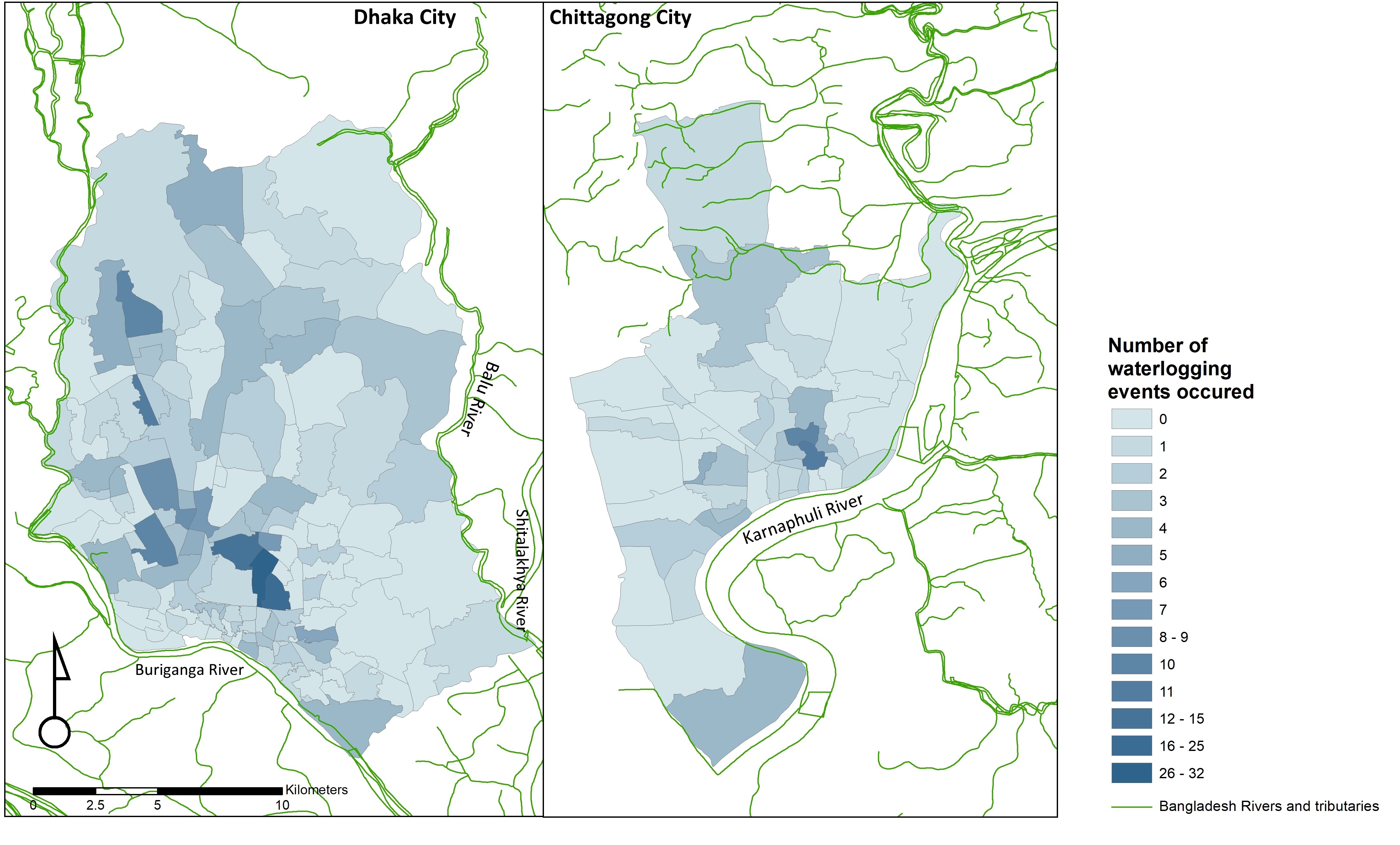
Newspaper-Reported Waterlogging Incidents — Dhaka & Chittagong
Choropleth map of council-level waterlogging incident frequency (2015–2018) in Bangladesh's two largest cities, derived from systematic newspaper archive analysis.
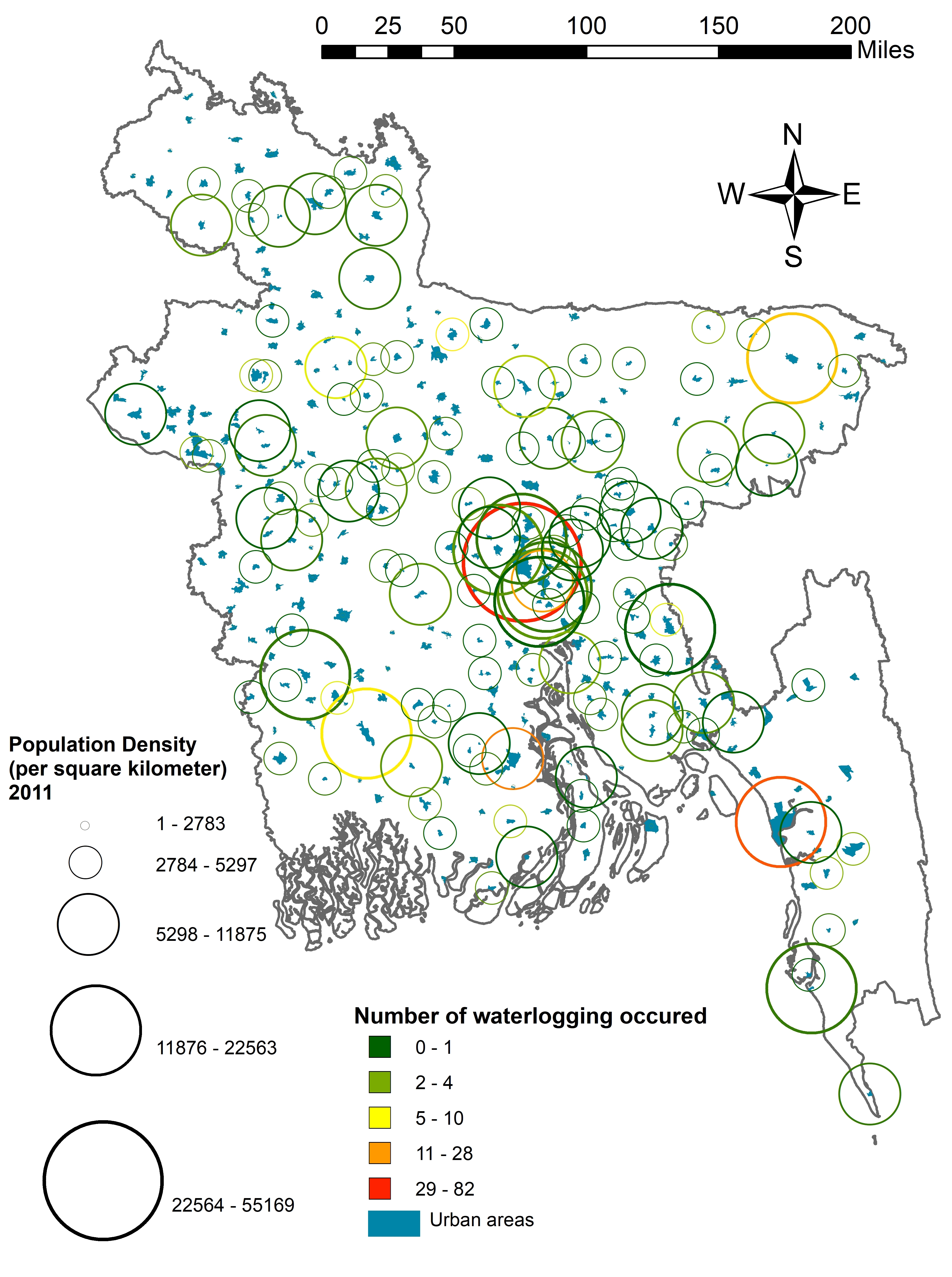
Population Growth vs. Waterlogging Events (2001–2011)
Bubble map relating population growth (circle size) to waterlogging frequency (circle color) across Bangladesh districts. Blue-bordered areas denote urban regions.
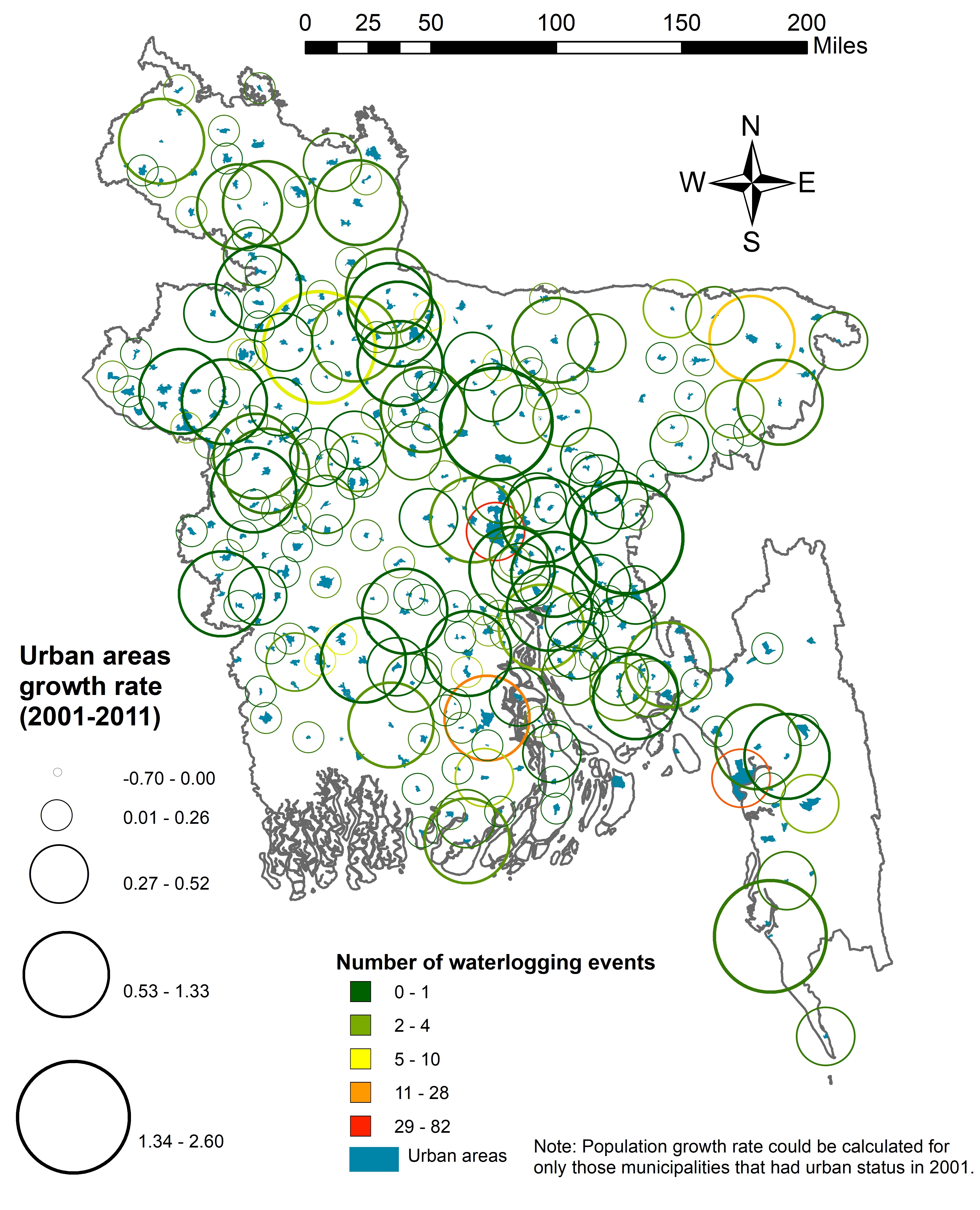
Urban Area Growth Rate vs. Waterlogging Events (2001–2011)
Bubble map relating urban area expansion rate (circle size) to waterlogging frequency (circle color) across Bangladesh districts, revealing how rapid urbanization drives flood vulnerability.
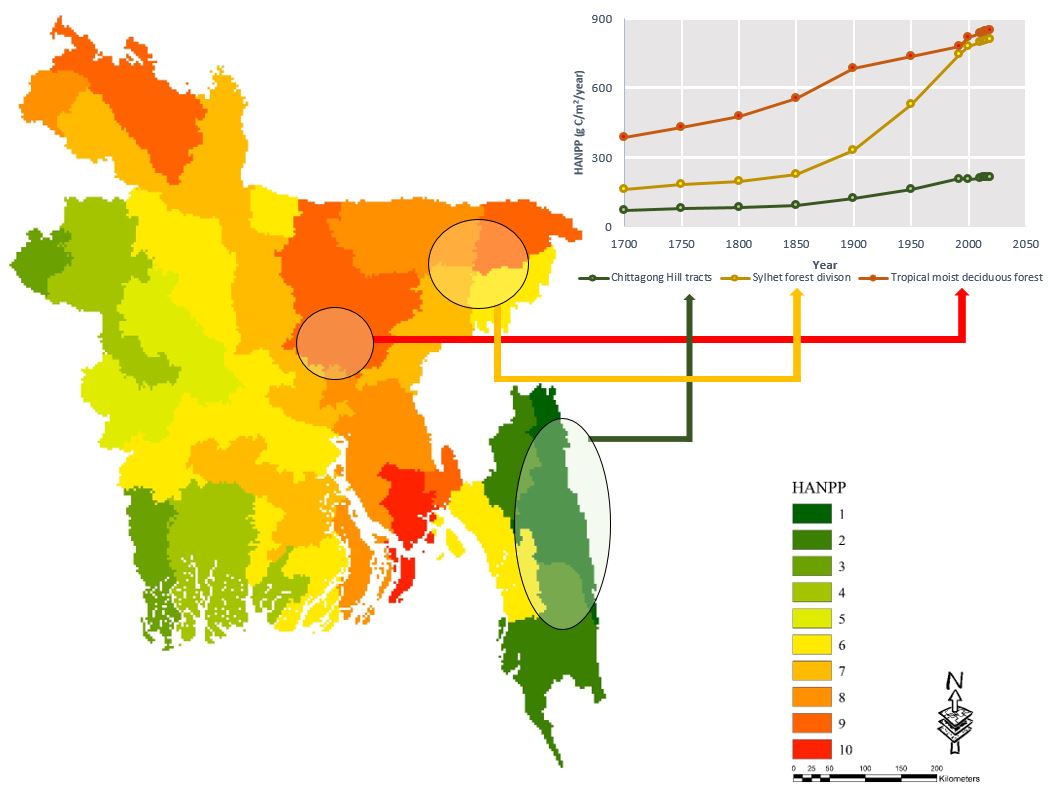
Historical & Projected HANPP by District — Bangladesh (1700–2100)
Time series projections of Human Appropriation of Net Primary Production (HANPP) for each district of Bangladesh, showing past land-use trajectories and modeled futures to 2100.
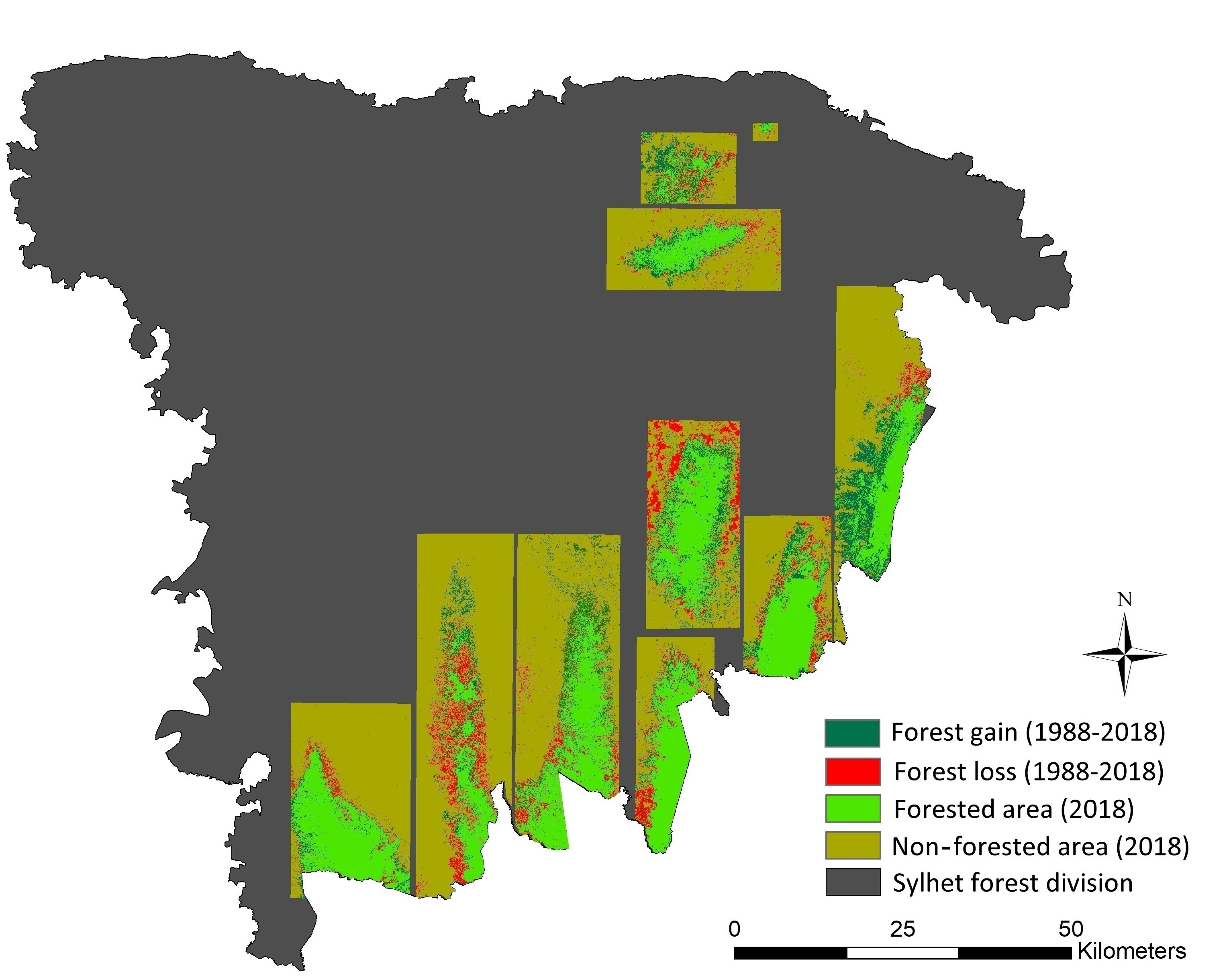
Land Use Change — Bangladesh
Spatial characterization of land use transition patterns across Bangladesh, supporting the HANPP historical reconstruction study.
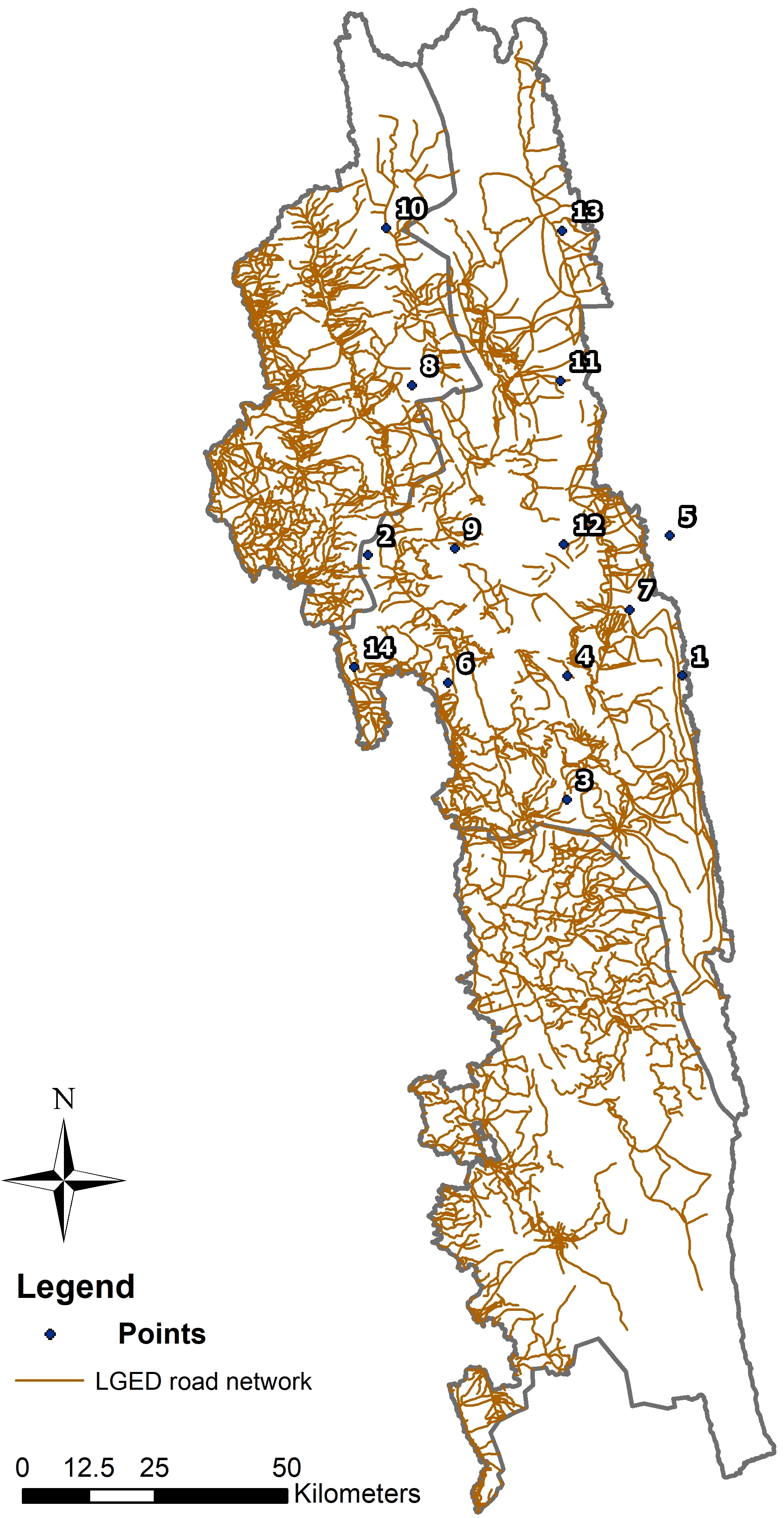
Random Sampling Area Map — Chittagong Hill Tracts
Randomly selected field survey sampling points in the Chittagong Hill Tracts, with road network (LGED) overlaid to show site accessibility for field data collection.
Biodiversity & Conservation
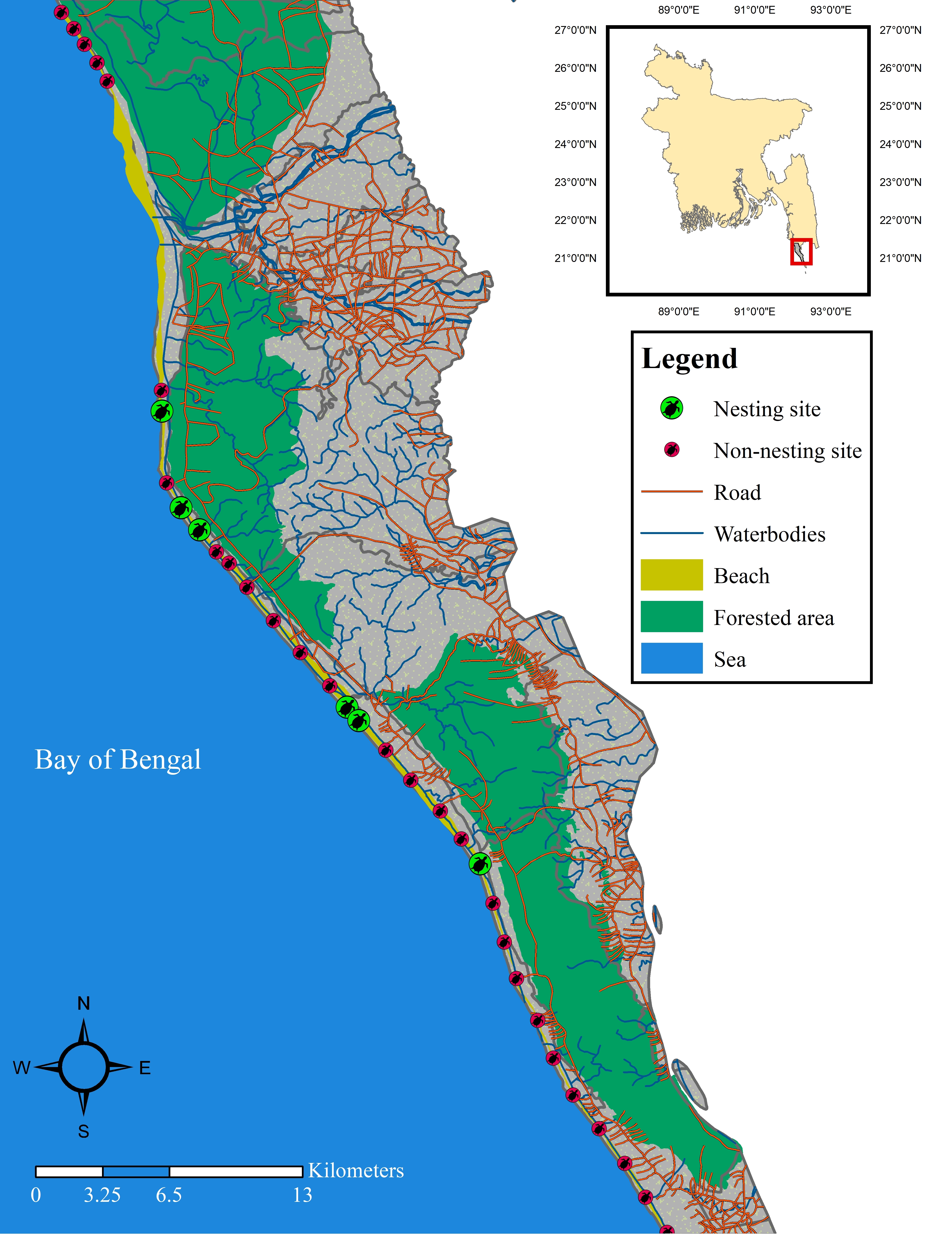
Sea Turtle Conservation Study Area
Study area map delineating the survey zones along the Bay of Bengal coastline used in the sea turtle nesting and beach profile investigation.
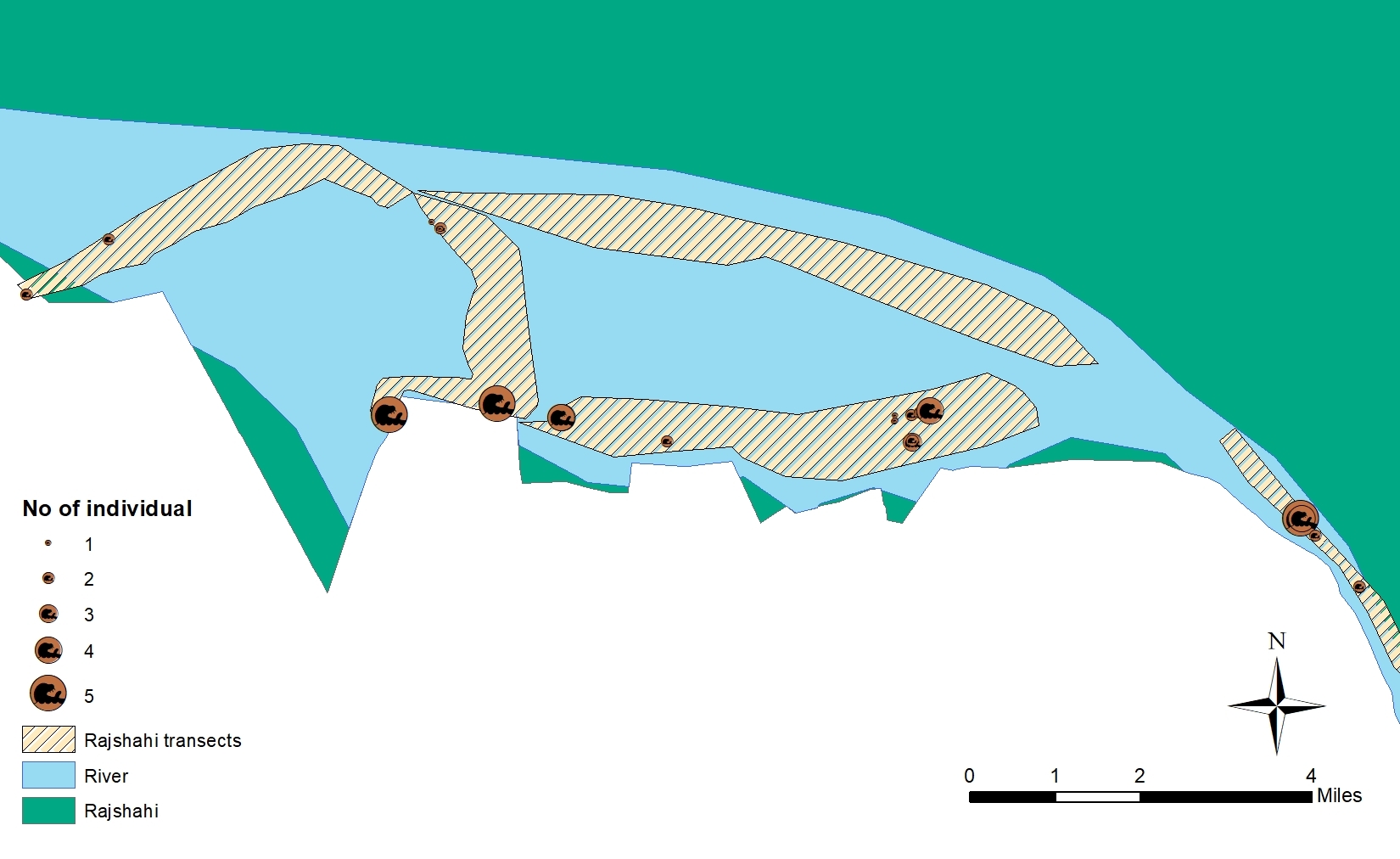
Smooth-Coated Otter Signs — Rajshahi Transects
Spatial distribution of 62 otter presence signs across five survey transects in Rajshahi, concentrated along riverbanks and adjacent terrestrial habitats.
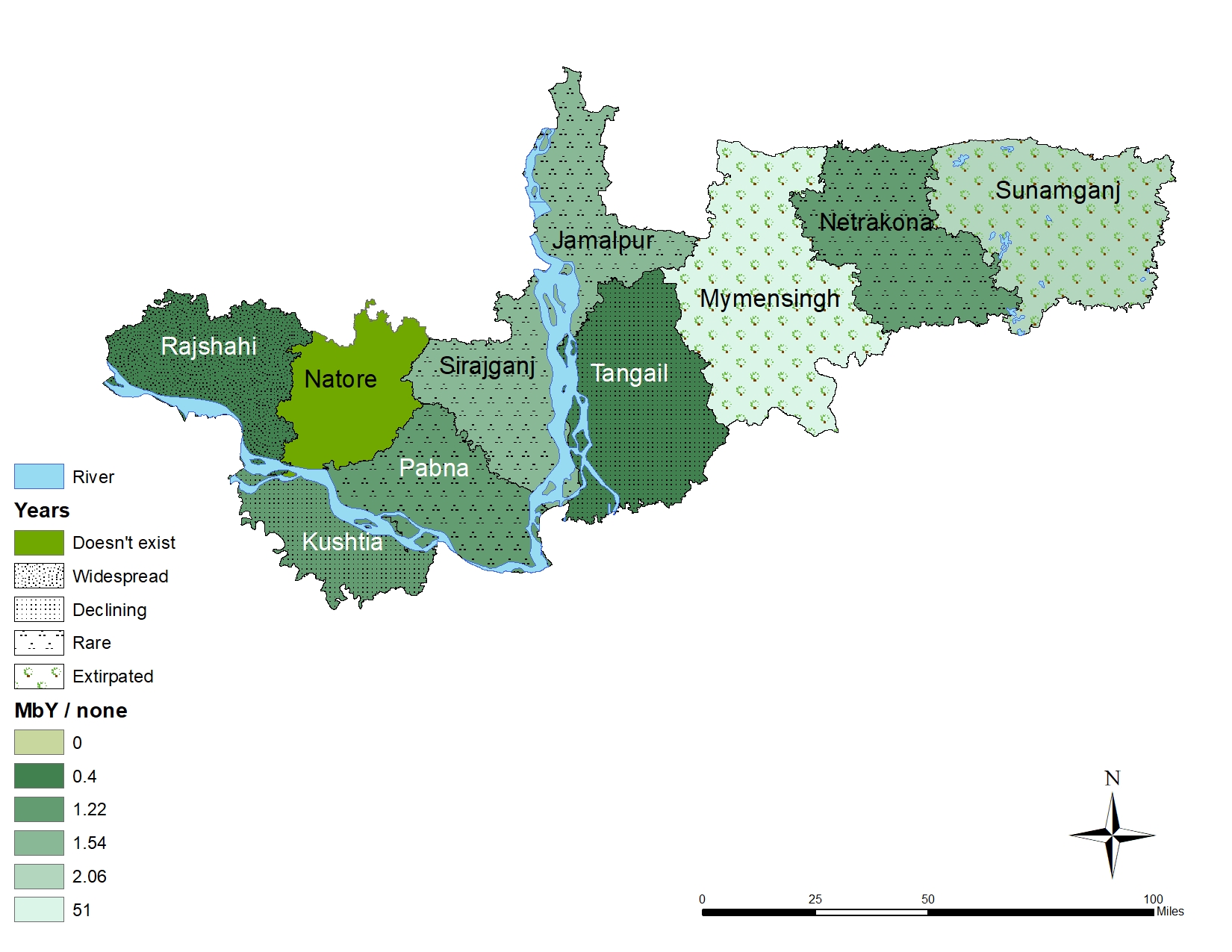
Otter Presence Across Northern Districts of Bangladesh
Dot density map of otter occurrence records across northern Bangladesh, illustrating temporal and spatial distribution patterns across survey years.
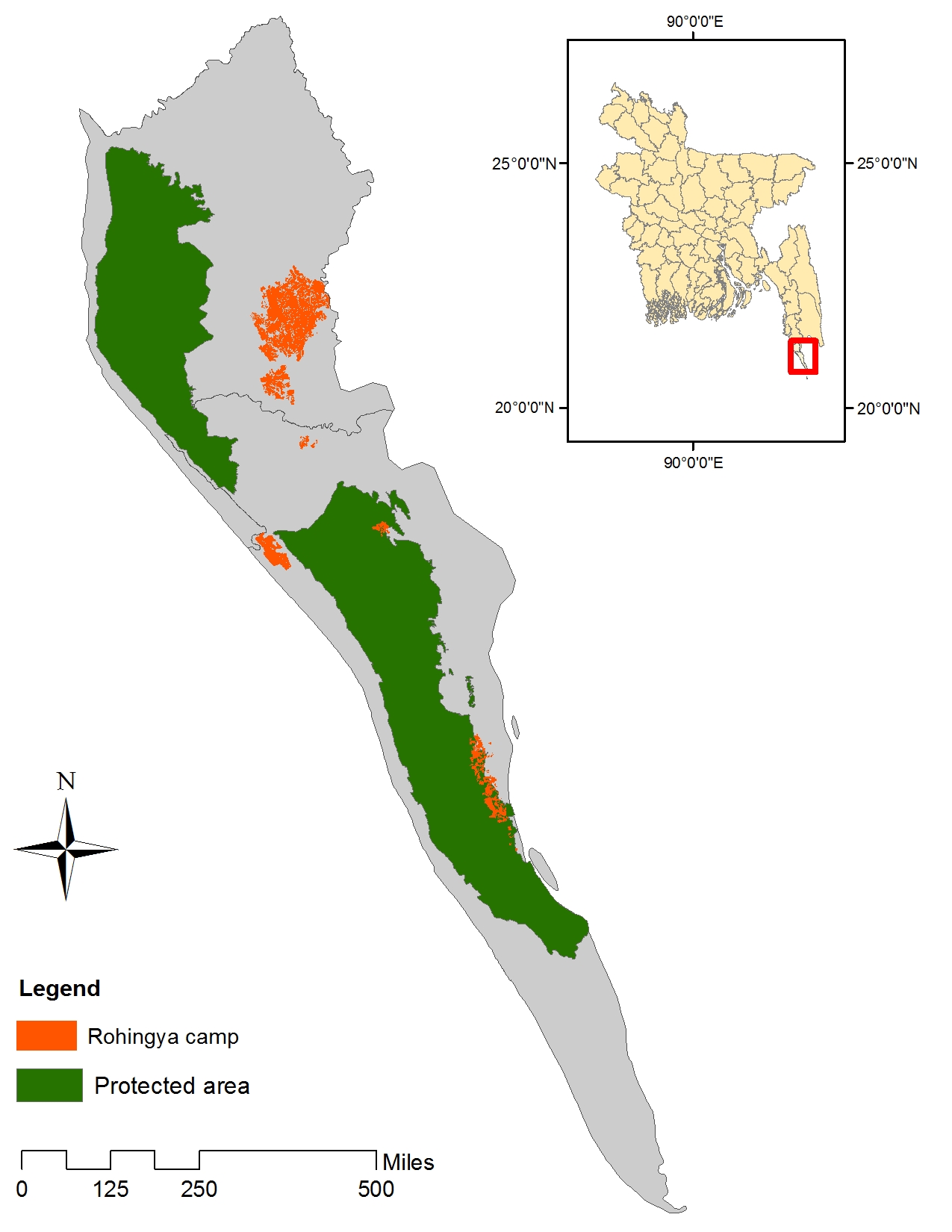
Rohingya Refugee Camp Spatial Distribution
Spatial mapping of Rohingya refugee camp locations, supporting environmental and resource pressure analysis in the Cox's Bazar region of Bangladesh.
Nutrient Flow & Phosphorus Analysis
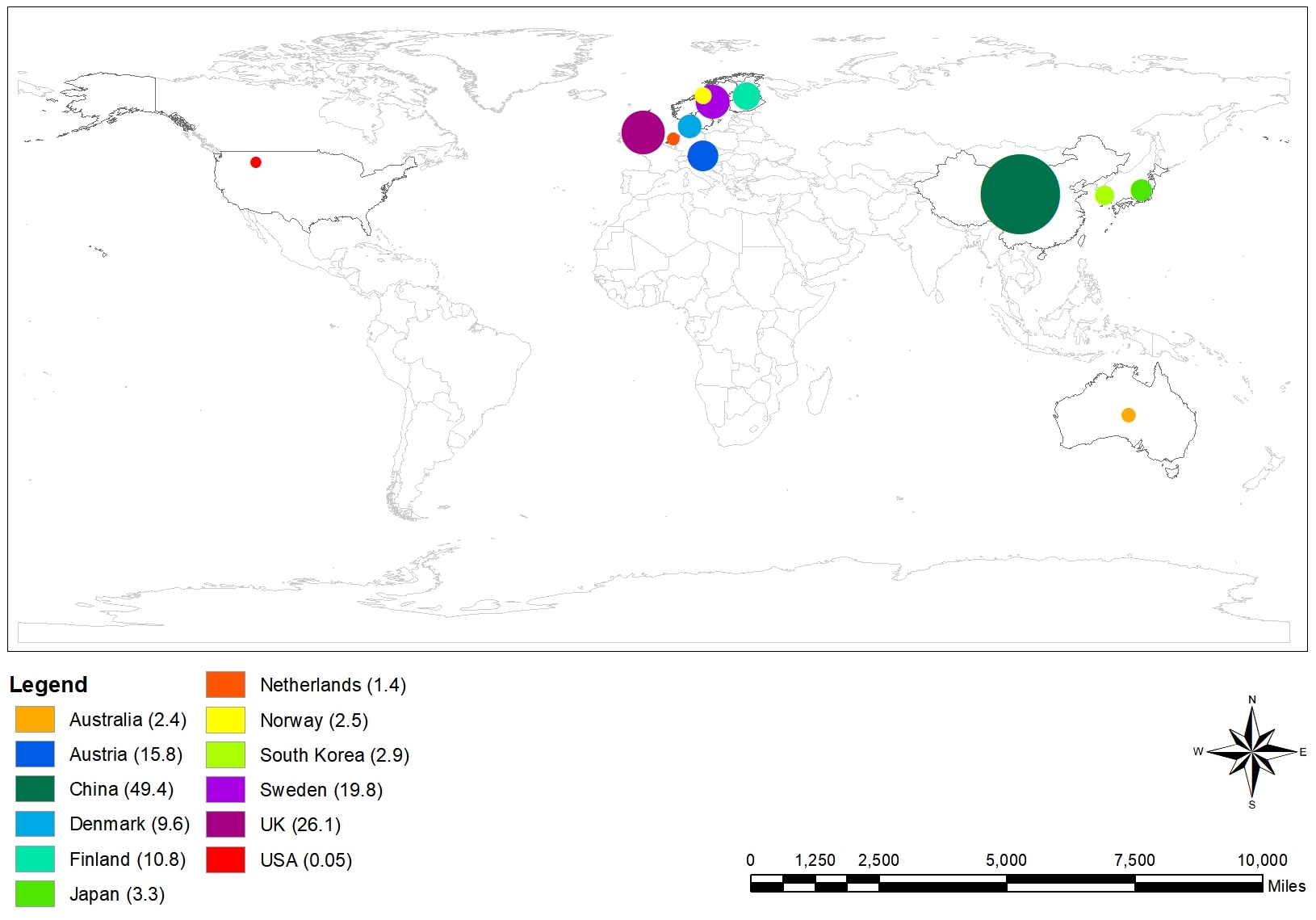
Global Substitutability of Recovered Phosphorus by Country
World map of the potential to replace conventional phosphorus with phosphorus recovered from the waste sector, illustrated using decoupling factors (values in parentheses per country). Published in Resources, Conservation and Recycling. View article ↗
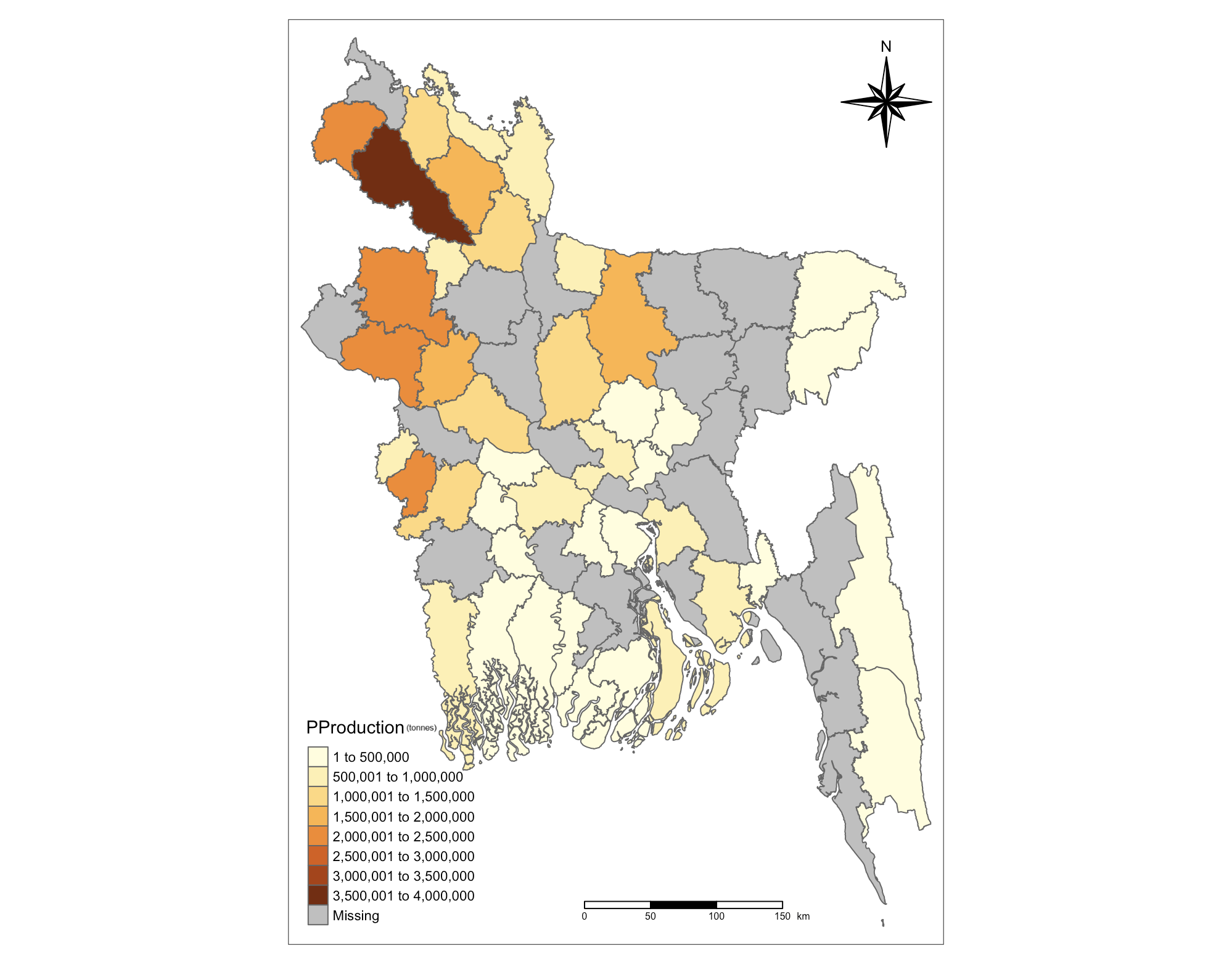
Phosphorus Production Levels by District — Bangladesh
District-level choropleth map of phosphorus production across Bangladesh, supporting nutrient flow and resource recovery analysis.
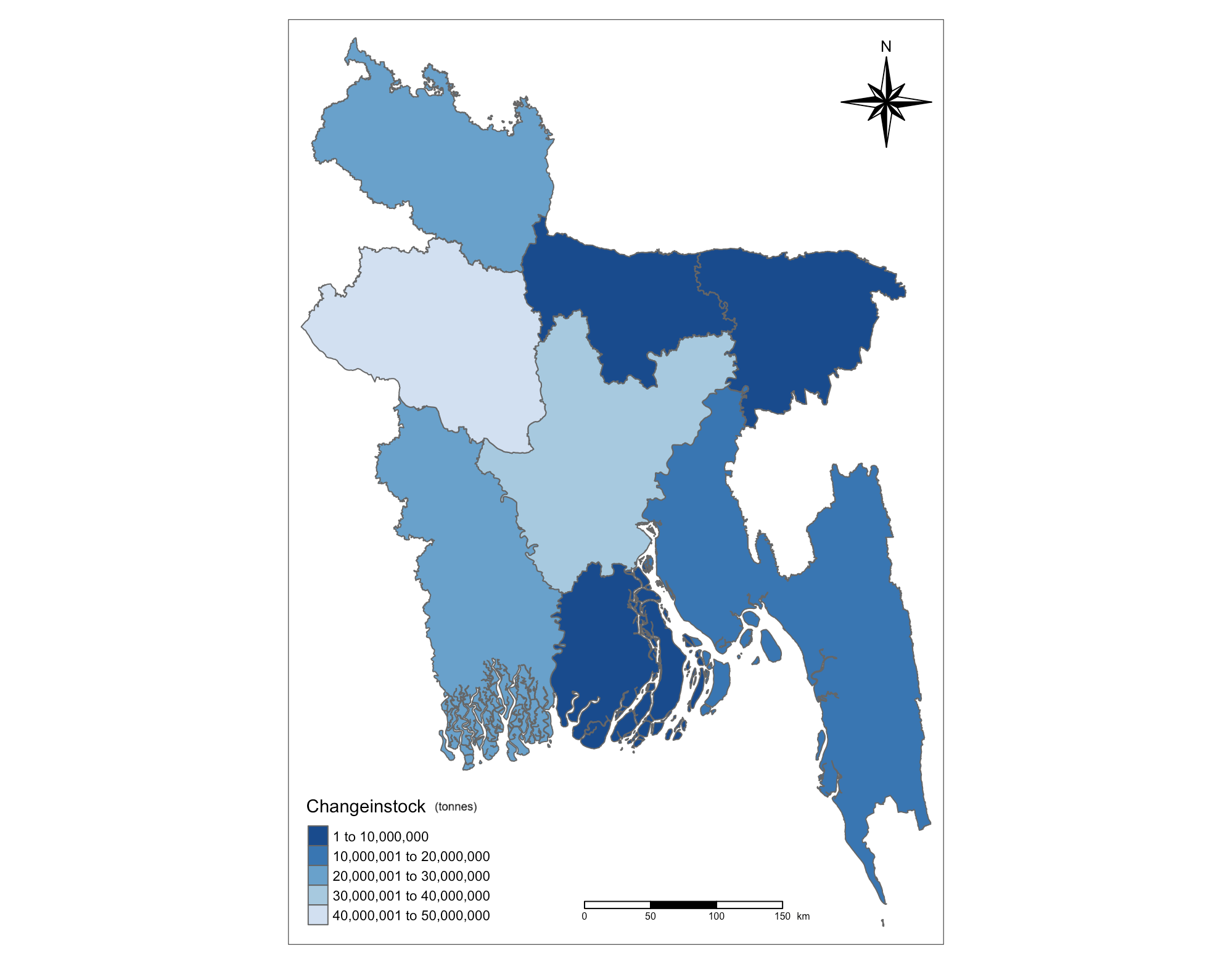
Changes in Phosphorus Stock Across Bangladesh's Divisions
Division-level map of phosphorus stock change over time, illustrating spatial patterns of nutrient accumulation and depletion across Bangladesh's agricultural regions.